

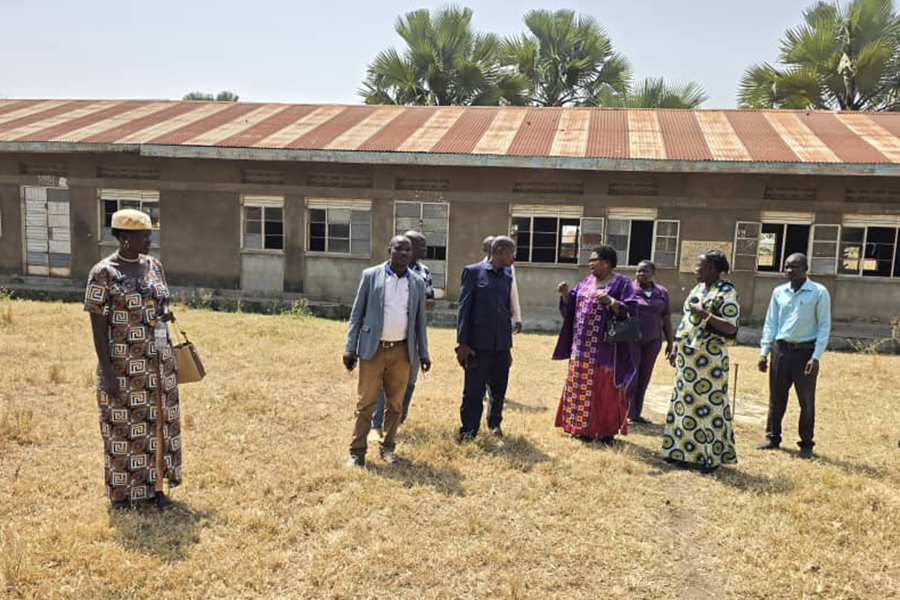
A section of government grant-aided schools in the Ma’di sub-region is grappling with dilapidated infrastructure, with administrators citing budget constraints as the main obstacle to rehabilitating ageing and unsafe structures.
School leaders say deteriorating facilities are affecting both learning and living conditions for students, particularly in boarding sections where dormitories are in poor shape and require urgent attention.
At Adjumani Secondary School, former students have stepped in to bridge the gap.
The Adjumani Secondary School Old Students Association (ASSOSA) has launched a major fundraising campaign aimed at restoring key infrastructure at the school.
The association plans to renovate the school library, the girls’ dormitory and the boys’ dormitory at an estimated cost of more than Shs 500 million.
William Ambayo, the Association Secretary and an alumnus of the school, said the initiative is driven by a sense of responsibility among former students.
“There is a great need for old students to join hands and support infrastructure development in our school so that learners can study in a safe and conducive environment,” Ambayo said.
“Government alone cannot manage everything, and as beneficiaries of this school, we must take responsibility to improve it.”
ASSOSA Chairperson Tom Keliki Gladys expressed confidence that the fundraising drive will succeed, citing strong backing from members both within Uganda and in the diaspora.
“We are confident that we shall achieve our dream of making Adjumani Secondary School great again because our association has members both locally and in the diaspora,” Keliki said.
“Everyone is committed to restoring the former glory of this school.”
Treasurer Rose Faida said the association is mobilising funds through multiple channels, including membership fees, annual subscription contributions and the sale of branded corporate wear.
“Every contribution, no matter how small, is helping us move closer to our target,” Faida said.
Among the notable alumni backing the initiative is Agnes Chandia Baku, Commissioner for Nursing and Midwifery at the Ministry of Health. She pledged to support the campaign through mobilisation efforts and engagement with key stakeholders.
“I will continue supporting my former school by mobilising fellow old students and lobbying relevant stakeholders to contribute towards these important projects,” Baku said.
Education stakeholders in the Ma’di sub-region say such alumni-led interventions can play a critical role in supplementing limited government funding, especially in rural and semi-urban areas where infrastructure deficits are more pronounced.
They argue that strengthening partnerships between schools, alumni and the wider community is essential to ensuring that learners study in safe, dignified and well-equipped environments.